Sardinia - Jewel of the Mediterranean

Tour Code: ITA05

An 8-day holiday to the 'Jewel of the Mediterranean' in search of the plants, birds and butterflies of the island's coastal lagoons and mountainous interior.

£2,195

Flight Inclusive

£1,995

Land Only
Why Choose Naturetrek?

Click any badge to read more reviews

Tour Itinerary and Reports

View Day by Day Itinerary and Tour Reports

1 Itinerary 22 Tour Reports
Can I Help You?
Carbon Footprint

668kg CO2e

With International Flights

213.8kg CO2e

Tour Only

What does this mean?

Highlights

  • Salt pans filled with Flamingoes, waders & Slender-billed Gulls
  • 28 orchid species amongst a profusion of wild flowers, including endemics
  • Mountainsides covered in maquis & Cork Oak woodland
  • Eleonora’s Falcon, Barbary Partridge & Audouin’s Gull
  • Visit ancient Nuraghi villages – a Bronze Age civilization
  • Taste the ‘blood cleansing’ Cannonua wine

Summary

This is a 2-centre wildlife holiday on a beautiful island – the 'Jewel of the Mediterranean'. Surrounded by crystal-clear sea, Sardinia offers a range of habitats from the salt pans around Cagliari to the mountains of Monte Arcosu and the rugged Gennargentu range. These maquis-covered limestone mountains descend to an unspoiled coastline of remote sandy coves. We access one, Cala Luna, by boat from the pretty harbour of Cala Gonone, taking a swim before the cliff-walk back. On such day walks we amble slowly as we search for wayside plants, birds and butterflies under the guidance of our expert leader. We may also visit such archaeological sites as the Neolithic ‘Giant’s Tomb’, the Nuraghic villages at Tiscali, and other prehistoric Nuraghic dwellings dating from around 2,000 BC.

Please note that, depending on flight schedules, the published itinerary may be reversed but will still have the same number of nights at each location.

It was our affection for Corsica and the great success of our tours there in recent years that first attracted us to Sardinia. Both islands have been so fortunate to escape the ravages of tasteless tourist developments that have afflicted other Mediterranean areas and, like Corsica, Sardinia is a large island with a rich natural history that is not well known to Britons. Famed more for its fabulous white sandy beaches and crystal waters — some of the best in the Mediterranean — and known as ‘the Jewel of the Mediterranean’, Sardinia also has some of the wildest and most beautiful countryside in Europe. Indeed, for the naturalist, it is more the island’s abundance of coastal lagoons, extensive forests, rugged mountains and limestone hills that prove most attractive, and which are home to a wide variety of interesting flora and fauna. Sardinia is also an ancient and mystical land where a Bronze Age people built the famous nuraghi stone towers (of which 7,000 remain) and the equally impressive ‘giant’s tombs’ which are amongst the most splendid of European Megalithic buildings. Since that time the Sardinians have suffered wave after wave of seaborne invaders — first the Phoenicians, then the Carthaginians, the Romans and the Moors, all of them leaving behind ruined temples and other monuments in their wake. The Sardinian people themselves frequently fled to the hills, becoming a wild and defensive race who eked out a living as hill shepherds and bandits! It is perhaps this defensive and wary nature that today has kept Sardinia relatively free of ugly tourism development.

We begin our holiday with a flight to Olbia from where we drive south to the village of Dorgarli. For the next four nights we will be based in a very friendly, family-run hotel near the east coast of the island. This will be our base from which to explore the Sopramonte region of the Gennargentu Mountains, where shepherds still roam with their large flocks of goats and sheep. This is a rugged and beautiful area of maquis-covered limestone mountains that descend to an unspoilt coastline of remote sandy coves and isolated cave systems where the endangered Monk Seal used to breed. The mountain villages are decorated with dramatic murals depicting local customs and some with topical and political themes. We will walk on Bruncu Spina where we may find alpine plants such as Corsican Saxifrage and Rock Cinquefoil and, depending on the timing of the season, we should see sheets of Crocus minimus and Viola corsica. Amongst the trees we will look for the national flower, Paeonii mascula ssp. russii, while birds may include Rock Thrush, Marmora’s Warbler, Corsican Finch and perhaps Golden Eagle.

From the pretty harbour of Cala Gonone we will take a boat along the coast to an area of cliffs where Eleonora’s Falcons breed. Hopefully we will see this late-breeding falcon at this known nesting colony. We next head back to the exquisite cove of Cala Luna, from where we will explore the gorge of the Rio Codula di Luna on foot. After a picnic lunch and perhaps a swim, we take the boat back to Cala Gonone and the gelateria on the harbour front! On all our walks we will amble gently through the day as we search for wayside plants, birds and butterflies under the guidance of our expert leader. We will also hope to find time to enjoy such nearby archaeological sites as the Nuraghic villages of Mannu, in a dramatic clifftop setting, and Serra Orios, dating from around 2,000 BC.

For the second part of this 2-centre holiday we will drive south to Capoterra, via Oristano on the west coast, where we will explore the lagoons looking for wetland birds such as Purple Heron and Red-crested Pochard. In coastal garrigue we will also hope to find Mirror Orchid (Ophrys speculum) and Ophrys eleanora.

We will be based in Capoterra for our final three nights. From here we will visit the nearby coastal marshes of the Gulf of Cagliari, where rare breeding birds include Greater Flamingo, Glossy Ibis, Little Bittern, Purple Heron, Cattle Egret, Avocet, Black-winged Stilt, Red-crested Pochard, Gull-billed Tern, Slender-billed Gull and Spectacled Warbler. We will also visit Monte Arcosu, WWF’s largest Italian nature reserve and a fine example of the magnificent forest that once clothed the island prior to the logging and then fires that destroyed so much of it in the earlier part of this century. The 915-metre granite peak of Monte Arcosu towers above the reserve, whose cliffs, crags and outcrops support a maquis flora of Narrow-leaved Cistus, Phillyrea latifolia, Lentisk, Rosemary, broom, juniper, Oleander and Strawberry Tree. In the forests are Holm, Pubescent and Cork Oaks, whilst Olive and Carob Trees stand in the dry glades and pastures. The endangered Sardinian Deer (an endemic subspecies of Red Deer), Fallow Deer, Wild Cat and Wild Boar all occur here, as well as a variety of such woodland and maquis birds as Coal Tit, Roller, Bee-eater, and Subalpine, Marmora’s, Dartford, Spectacled and Sardinian Warblers. Overhead birds of prey are possible — with Buzzards, Golden Eagles and Peregrines all breeding here.

We will also explore the Cixerri Valley and the peaceful wooded valleys of the Forest of Margani where we should find good numbers of orchids, including the endemic Ophrys chestermanii, as well as Cirl Buntings and Firecrests. The coast adjacent to our hotel often holds migrant species and Laguna di Nora hosts the largest breeding colony of Audouin’s Gulls in Italy, unusually on a low island rather than the more usual rocky offshore islet.

Outline Itinerary

Day
1
Fly Sardinia; transfer Dorgali
Days
2 - 4
Walking excursions in the Gennargentu Mountains in search of plants, birds and butterflies
Days
5 - 7
Transfer to Capoterra for natural history excursions
Day
8
Fly London
Itinerary Image
View Itinerary

What's Included?

Food

All food included in the price.

Accommodation

A 2-centre holiday using comfortable hotels with private facilities and serving fine local food.

Dates & Prices

2027

Flight Inclusive

£2,195

Land Only

£1,995

Single Supplement

£295

Regional Departures

Would you rather depart from an airport closer to you? Give us a call at 1-844-433-9473 and we'll see what we can do.

Tour Leader
Luca Boscain
Luca Boscain
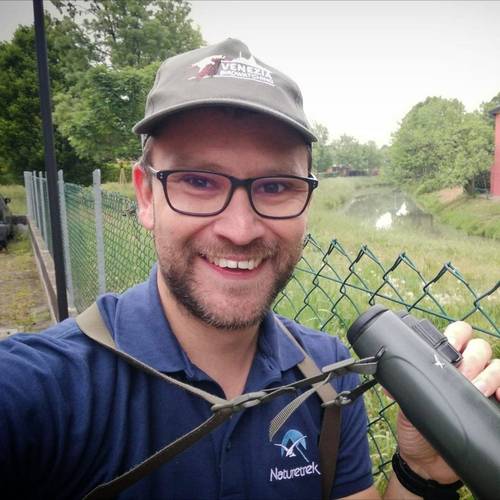
Luca is an Italian naturalist from Treviso. He began birding in childhood and gradually developed a broader interest in all aspects of nature, especially butterflies, dragonflies and plants.
Read more about Luca

Prefer to Travel in a Private Group?

For any interested natural history club or society, we can arrange for a private departure of this tour.

Enquire
Naturetrek Logo

Why Naturetrek?

At Naturetrek we craft expertly-guided group and tailor-made wildlife holidays and cruises to all seven continents. On one of our holidays, you can be assured that our passionate team will enable you to experience and enjoy the best of the world's wildlife and natural spectacles in as comfortable and rewarding a manner as possible, caring as best we can for the environment in the process. We are proud to provide:

  • The widest choice of wildlife holidays worldwide
  • Tours managed and led by naturalists, for naturalists
  • Outstanding value and exceptional customer service

Furthermore, as a Naturetrek client, our office team are always to on hand to help you – so if you have any queries about your holiday, whether before or after you have booked, we will be delighted to answer them on the phone. Please just give our team a call!

Why Choose Naturetrek?

Click any badge to read more reviews

My Saved Tours

Saved Tours

Click the star icon on any tour to save it here - you'll find this icon on tour pages and cards across the website.

Browse our tours