



 Loading search...
The Art of Attraction: Birds-of-paradise

Operations Manager and Tour Leader
April 2026
The birds-of-paradise (or 'BOP' for short!) are a flamboyant family found between the eastern reaches of Indonesia and the north-eastern coast of mainland Australia. Many are highly colourful and they frequently have complex mating rituals that can involve dancing, calling and display areas. They often live in forested areas, using the tops of trees or cleared areas on the forest floor as their lek sites, which can either be an individual or group display area. There are more than 40 species, coming under the avian family Paradisaeidae and divided into 15 genera. They are species that are often high on someone’s bucket list to see; however, living in tropical rainforest can mean that it requires both significant effort and great patience in order to find these avian marvels.
Browse Bird-of-Paradise by Tour
Recent research has shown that some birds-of-paradise show biofluorescence in their feathers, which is emitted as a glow and can be seen by other birds that are able to detect light on the UV spectrum. It shows as blues, yellows and greens and is produced by particular areas around their head and feet, as well as inside the mouth. It’s thought that this might further enhance their already elaborate courtship displays.
Paradisaea is the largest genus, which includes Greater and Lesser as well as Red, Blue and Raggiana Birds-of-paradise. The males are large birds with colourful and flamboyant flank plumes. Typical courtship displays involve shaking these feathers and can involve group performances; display sites are typically at the top of the forest canopy. Females are a similar size, but brown in colour, and do all the raising of the chicks. Their diet primarily consists of fruit and arthropods. The Raggiana BOP is the national bird of Papua New Guinea.
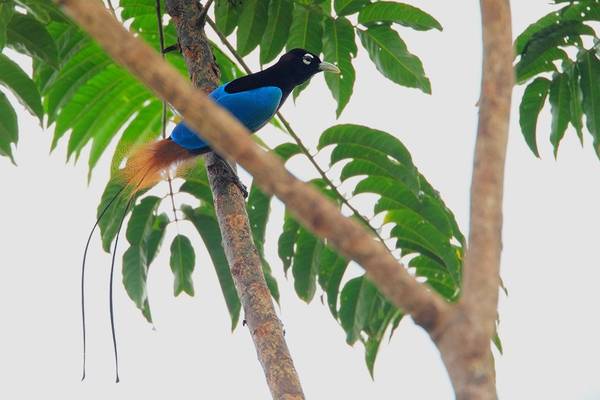
Blue Bird-of-paradise
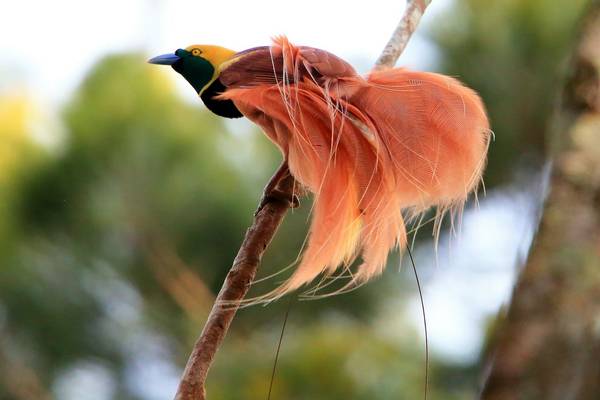
Raggiana Bird-of-paradise
There are five species of Astrapia, all found on the island of New Guinea. Males are mainly dark with iridescent feathers and long tails. They are primarily montane birds. Females are more drab and the sole caregiver for their offspring. Due to their dense forest habitat, little is known about their display habits and nesting behaviours. The Ribbon-tailed Astrapia male has a tail that is over three times its body length, giving it the longest tail relative to body size of any bird.
Parotias, Lophorinas and Riflebirds are the shapeshifters of the family, accounting for 10 species across the three genera. Male Riflebirds display iridescent throat patches, changing their shape by fanning out their wings. Lophorinas males are black with iridescent blue and are able to completely change their body shape. Parotias are mainly dark with head plumes, iridescent throat patches and flank plumes which are used to create a disc-like body shape. It can take up to five years for males to develop their full plumage and during this time they watch older males and practise their dance routines, sometimes pairing up with other young males and taking turns to display to each other.
Sicklebills also show some shape-shifting behaviour. There are ‘long’ and ‘short’ tailed Sicklebills; however, they are not closely related, despite the similar names, although males of both genera turn their bodies into large ovals or discs, often referred to as ‘comet-shaped’. Females are relatively similar in size and colour compared to most bird-of-paradise species. The Black Sicklebill male is among the largest of all bird-of-paradise species.
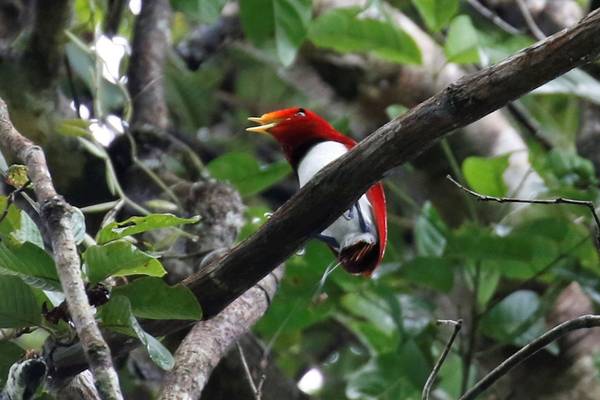
King Bird-of-paradise
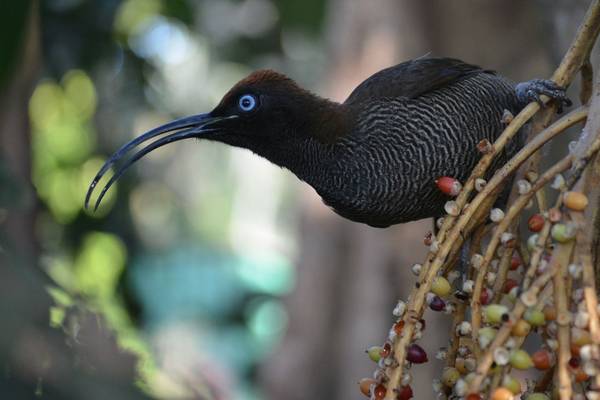
Brown Sicklebill
Sickle-tails are on the smaller end of the species, but the males are brightly coloured, with long, wiry tail feathers. The three species in this genus are Wilson’s, King and Magnificent Birds-of-paradise. Wilson’s BOP is among the most colourful of birds, with a brilliant turquoise-blue head, red and yellow feathers on the mantle, and an iridescent green/purple chest shield. The Indonesian Malay people refer to it as the ‘bird of the gods’.
Manocudes and Paradise Crows are large black birds that divide into three genera. Manocudes have glossy, black plumage; females are similar to males but lack the vocal variety due to having simplified throat anatomy. The crows have black bodies with brown wings and are found in the Molucca Islands. Unusually, the males of all species in these genera help with raising the young.
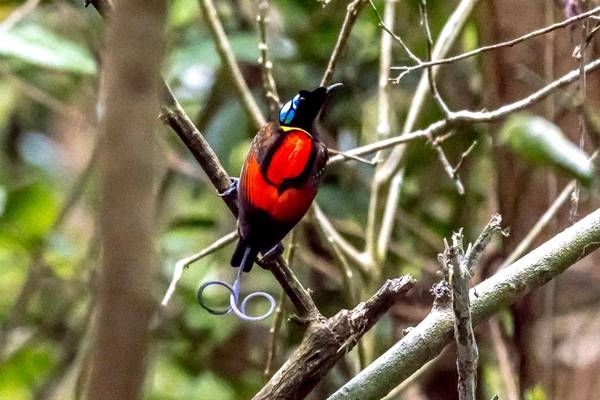
Wilson's Bird-of-paradise (Mark Carsley)
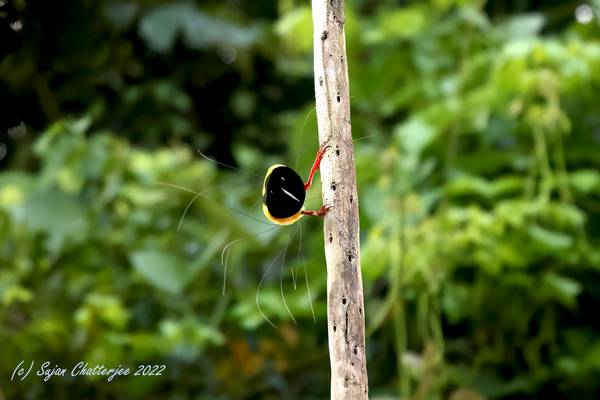
Twelve-wired Bird-of-paradise (Sujan Chatterjee)
Paradigallas also have reduced sexual dimorphism, with males and females looking relatively similar, with their main colouration in the form of blue and yellow facial wattles. They primarily eat fruit, although they will also take insects or small lizards and frogs. They are mainly solitary birds, with females taking on the parental care. The nests are cup-shaped and females have been known to re-use nests.
There are a few outliers, where there is only one known species in a genus, including the Standardwing, King-of-Saxony and Twelve-wired Birds-of-paradise. The Twelve-wired uses his long, wiry feather appendages to caress the female as part of his courtship display, while male King-of-Saxony Birds-of-paradise have amazing long head appendages, unlike any other feather, that they wave around during displays.
Birds-of-paradise can be seen on our West Papua – A Birds-of-paradise Special, Papua New Guinea's Highlands & Islands and Papua New Guinea's Birds-of-paradise tours, as well as our Undiscovered Indonesia – Sulawesi to Raja Ampat or Raja Ampat – The Paradise of West Papua cruises, with Riflebirds also being seen on our Australia tours to Queensland. Please refer to individual itineraries for details of species that can be seen on each tour. We can also create Tailormade itineraries to some locations for more bespoke travel.
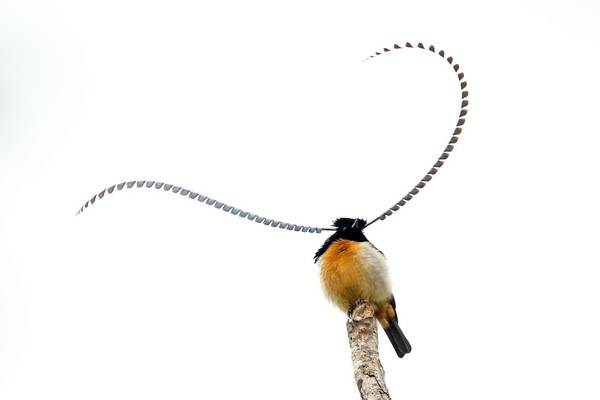
King-of-Saxony Bird-of-paradise
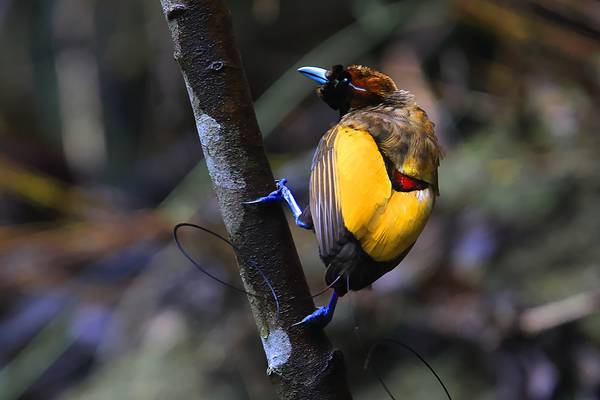
Magnificent Bird-of-paradise (Sujan Chatterjee)
Birds-of-paradise by Tour
Key:E - Endemic
N - Near endemic
✓ - Can be seen on this tour
— - Not seen on this tour
| Species | Tour: PNG Highlands & Islands | PNG BOP | West Papua BOP Special |
|---|---|---|---|
| Arfak Astrapia | — | — | ✓ |
| Black Sicklebill | ✓ | ✓ | ✓ |
| Black-billed Sicklebill | ✓ | ✓ | ✓ |
| Blue Bird-of-Paradise | ✓ | ✓ | — |
| Brown Sicklebill | ✓ | ✓ | — |
| Crescent-caped Lophorina | — | — | ✓ |
| Crinkle-collared Manucode | ✓ | ✓ | ✓ |
| Glossy-mantled Manucode | ✓ | ✓ | ✓ |
| Greater Lophorina | — | ✓ | ✓ |
| Growling Riflebird | ✓ | ✓ | — |
| Jobi Manucode | ✓ | ✓ | ✓ |
| King Bird-of-Paradise | ✓ | ✓ | ✓ |
| King of Saxony Bird-of-Paradise | ✓ | ✓ | ✓ |
| Lawes's Parotia | ✓ | — | — |
| Lesser Bird-of-Paradise | — | ✓ | ✓ |
| Long-tailed Paradigalla | — | — | ✓ |
| Magnificent Bird-of-Paradise | ✓ | ✓ | ✓ |
| Magnificent Riflebird | ✓ | ✓ | ✓ |
| Pale-billed Sicklebill | — | — | ✓ |
| Princess Stephanie's Astrapia | ✓ | ✓ | — |
| Raggiana Bird-of-Paradise | ✓ | ✓ | — |
| Red Bird-of-Paradise | — | — | ✓ |
| Ribbon-tailed Astrapia | ✓ | ✓ | — |
| Short-tailed Paradigalla | ✓ | ✓ | — |
| Superb Bird-of-Paradise | ✓ | ✓ | — |
| Trumpet Manucode | ✓ | ✓ | ✓ |
| Twelve-wired Bird-of-Paradise | ✓ | ✓ | ✓ |
| Western Parotia | — | — | ✓ |
| Wilson's Bird-of-Paradise | — | — | ✓ |
For more details on our tours to see birds-of-paradise, contact Alison Steel at This email address is being protected from spambots. You need JavaScript enabled to view it..
We can also offer tailormade tours to the region. For more information, please contact Jan Fox at This email address is being protected from spambots. You need JavaScript enabled to view it..