



 Loading search...
Laikipia: A Conservation & Sustainability Success Story
Head of Sustainability
14th January 2026
Head of Sustainability, Kerrie Porteous, took her family to explore a lesser-known region of Kenya over the October half-term last year.
Having spent some years as our Operations Manager for Kenya and overseen many tours in that time, I know the country’s highlights well. Home to arid deserts, verdant forests, rolling grasslands, the snow-capped peak of Mount Kenya and the high escarpments of the Great Rift Valley, Kenya boasts a variety of landscapes and habitats unrivalled in Africa. The wildlife is abundant (including over 1,100 bird species), approachable and easily photographed. Kenya’s Maasai Mara National Reserve is perhaps the world’s most famous wildlife destination, and with good reason: it is home to one of nature’s most spectacular events – the Great Migration – together with some of Africa’s most sought-after creatures.
In my current role, looking after Naturetrek’s sustainability and responsible tourism initiatives, lesser-known Laikipia came onto my radar for the first time last year. Situated in the country’s central highlands, the Laikipia Plateau stretches from the eastern shoulder of the Great Rift Valley to the slopes of Mount Kenya. It comprises a mosaic of privately owned farms and wildlife conservancies, many with roots in cattle ranching dating back to the 1900s. Together, these ranches and conservancies form a massive contiguous wildlife area that is increasingly recognised as a conservation success story. Over the October half-term, I took my husband and two girls, aged nine and four, to explore for ourselves. If family or multigenerational travel isn’t on your agenda, you can still read on! This region has much to offer the keen naturalist – whether travelling as a family, couple, single or on a group tour – with superb wildlife, easy access, fabulous properties and a refreshing lack of other tourists.
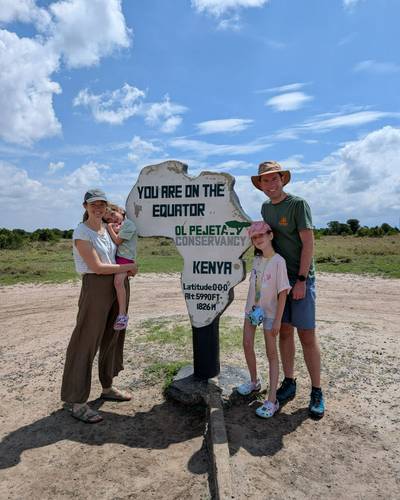
The Porteous family on the Equator in Ol Pejeta
Our adventure began with a direct flight to Nairobi and an early start the next day for the drive north to Ol Pejeta Conservancy. It is possible (and easy) to fly here, but the drive only takes around four hours on good roads, and there’s something to be said for taking the slightly slower route and absorbing all the new sights and sounds along the way. In recent years, Ol Pejeta has evolved into a pioneering model of conservation, community development, tourism and cattle ranching. The conservancy is plastic-free, most food is sourced locally, and it focuses on providing a high-quality, low-impact experience that protects its wildlife and supports the surrounding community. It is home to the largest population of Black Rhinos in Kenya, together with the last remaining Northern White Rhinos. We spent our first night at the stunning Ol Pejeta Safari Cottages, the perfect retreat for both family groups and anyone who enjoys their privacy. I was immediately nervous that I’d set the bar far too high for our future half-term holidays! We were picked up by our private guide and welcomed into our cottage by our own private
chef and server, who showed us to our two huge bedrooms, beautifully decorated living area with a cosy fireplace and extensive outdoor deck overlooking an acacia-studded stretch of river.
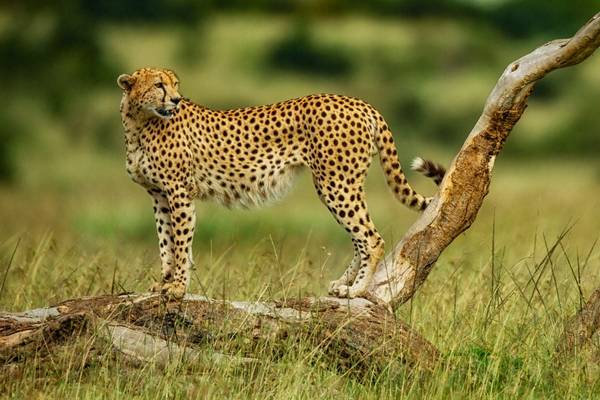
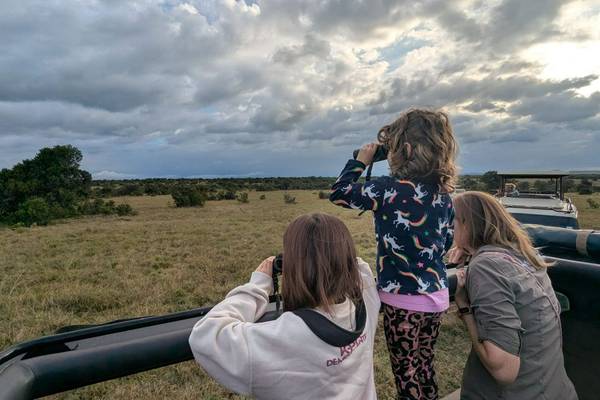
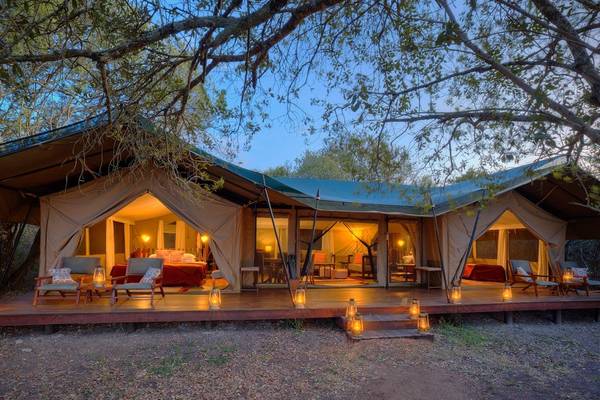
On our game drives in Ol Pejeta, we saw few other vehicles but plenty of wildlife – the perfect blend. Whilst criss-crossing back and forth over the Equator, the girls quickly learnt to distinguish their Thomson’s Gazelles from their Impalas, Gerenuks and Elands, their Black from their White Rhinos and their Grevy’s from their Plains Zebras. ‘Water-hogs’ (Common Warthogs) and Helmeted Guineafowl provided great entertainment, and we had magical close encounters with large herds of African Elephants and Reticulated Giraffes. The girls knew instinctively when
they needed to be quiet; we all agreed that silently watching a young Cheetah stalking through the grass at dusk was our highlight here.
If Safari Cottages set a high standard for our future half-term breaks, then Kicheche Laikipia, our second stop in Ol Pejeta, really put the nail in the coffin for any future British camping plans. Once you have experienced a night under canvas, complete with exceedingly comfortable double beds, hot shower, flushing toilet and someone popping a hot water bottle in your bed for you whilst you’re at dinner, it’s hard to go back to camping mats and stumbling across a dark, wet field to visit the toilet block at 2 am. Add in the gentle wake-up call with tea, hot
chocolate and biscuits brought to our tent ahead of our morning game drive, and I’m afraid there’s no going back.
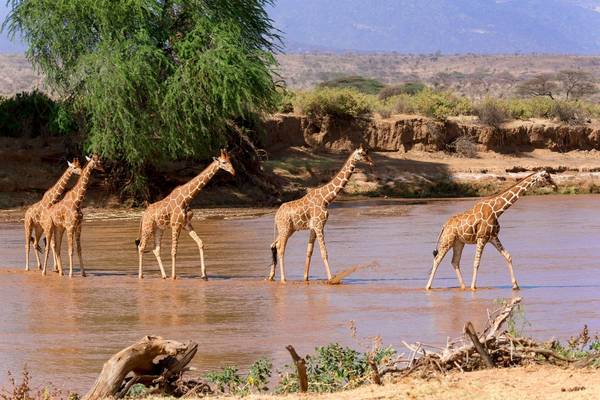
Reticulated Giraffes
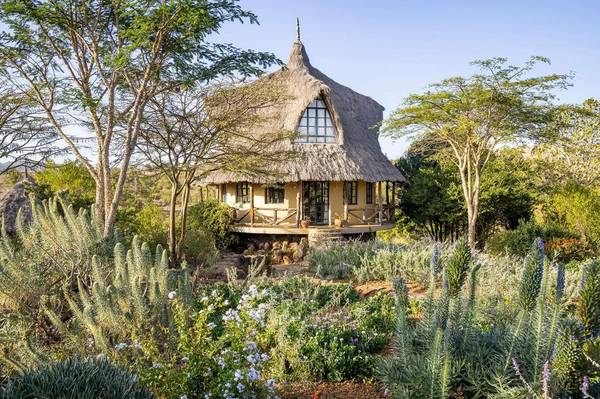
Olepangi Farm
With several game drives under our belt, I sensed the girls were ready for a break from being in a vehicle, and our next stop was the perfect change of scene. Olepangi Farm is nestled in the foothills of Mount Kenya; not a hotel or a safari lodge, nor a homestay, it felt like a ridiculously beautiful home from home. The girls were whisked away by the wonderful Naftaly, who kept them busy baking bread, meeting the farm’s bunnies, horse-riding, collecting eggs, gardening and milking the cows, whilst we relaxed, walked, explored and enjoyed the farm’s birdlife, art and delicious home-grown food. Olepangi was a magical place we’d go back to in a heartbeat.
Our final stop, El Karama Lodge, was a couple of hours’ drive further north. Set in its own conservancy, this was the lodge that had originally inspired our whole trip. El Karama felt like the gold standard in sustainable travel: its very presence protects the wildlife within the conservancy, and it provides stable, local employment for the local community. Herbs and salads are home-grown, whilst other fruit and vegetables are sourced from the same local seller who has been able to rely on the lodge’s custom for over a decade. If you want to feel good about how you are spending your tourist dollars, come here. Within the El Karama Conservancy the wildlife is plentiful, and the lodge feels truly remote. African Elephants, Reticulated Giraffes and Somali Ostriches all crossed the road on our approach to the lodge, and night drives yielded Bat-eared Fox, White-tailed Mongoose and our first Brown Hyena. Our huge, family tent came with a separate private dining area and large fireplace for toasting marshmallows after dinner, and after our morning game drive, our brilliant guide, Andrew, whisked the children off to ‘Bush School’ until lunchtime. We didn’t bump into another guest during our entire stay; while over-tourism is an increasing concern elsewhere, El Karama remains blissfully untouched by the outside world.
Safari holidays don’t always need to be ‘once in-a-lifetime’: we found ourselves with a week to spare in October and spent it enjoying superb wildlife, food and scenery in the company of some of the kindest, friendliest people in the world, in a place that many people had never heard of, and I can’t recommend it enough.
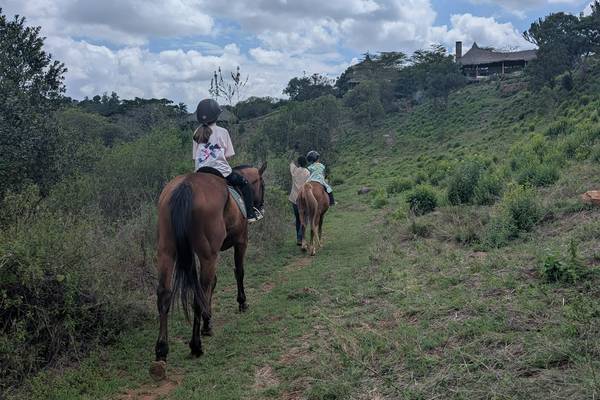
Horse riding at Olepangi
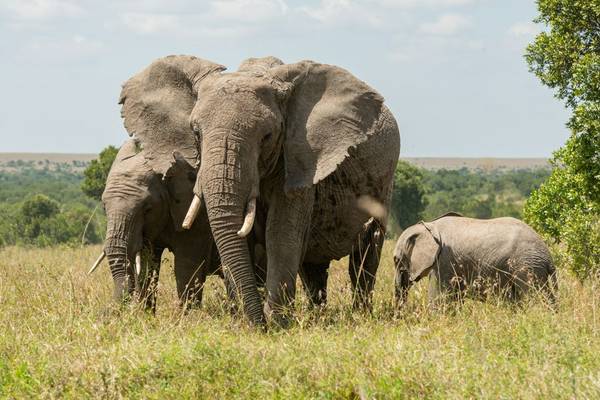
African Elephants, Ol Pejeta
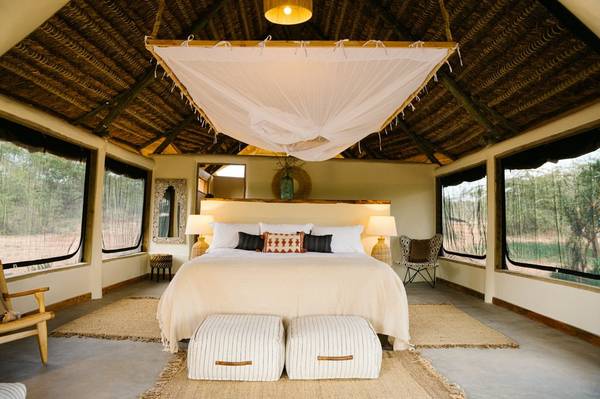
El Karama Lodge
Kerrie travelled on a Naturetrek Tailormade family holiday to Laikipia in October 2025. To enquire about your own tailormade tour to Kenya, please contact Jan Fox: This email address is being protected from spambots. You need JavaScript enabled to view it..
We also offer group tours to Laikipia as well as elsewhere in Kenya!