Our Nature Reserves
With the profits generated from 40 years of operating our wildlife holidays around the world, our foremost mission is to invest in, and thereby bring positive impact and benefit to, nature and the environment. In these fast-changing times, our support for nature and conservation is imperative.
Naturetrek was one of the very first British tour operators to encourage its clients to contribute towards offsetting their carbon emissions and has done so since 2000. Since 2007, we have additionally been making contributions, at our own expense, for every flight that we book. We set aside £15 for every person booking a long-haul holiday with us, and £5 on behalf of each of our short-haul travellers, which to date has raised over £625,000 and funded our very own ‘carbon retention’ project in Ecuador.
Additionally, since 2024, we have been invested our profits in purchasing land to create nature reserves in Italy and, most recently, Scotland.
Read more about all the Naturetrek Reserves below.
Quick Links:
Naturetrek Stuckindroin Reserve
The Naturetrek Stuckindroin Reserve sits at the head of Loch Lomond. Its 3,609 acres extend from Ben Vorlich at 3,094 feet down to the
loch just above sea level, and is home to diverse habitats, from loch shore and lochside meadows, to Scottish rainforest and wood pasture systems comprising native oak, ash, birch, rowan and alder, to high montane slopes protected within an SSSI on account of their rich flora.
We took ownership of the Stuckindroin estate in August 2025 and signed an interim management agreement with the RSPB, to enable their immediate management of the estate – with a view to a long-term nature restoration partnership being agreed. Since then, 350 sheep have been removed from the estate to allow native vegetation to regenerate naturally, and extensive renovations have been taking place to prepare the farmhouse for a new Site Manager, Mark Mitchell, and his family.
Early surveys are already revealing the reserve's rich biodiversity. Birds recorded include Golden Eagle, Ptarmigan, Greenshank, Golden Plover and a migrant Dotterel on the higher ground, alongside Black Grouse, Whinchat, Wood Warbler and a singing Icterine Warbler around the woodlands. Botanically, the estate boasts well-preserved wood pasture and healthy field-layer vegetation, and a National Vegetation Classification survey has already uncovered two indicators of temperate rainforest — Western Featherwort and Deceptive Featherwort. Remarkably, Stuckindroin is also home to its own endemic plant, the Ben Vorlich Hawkweed, seen only twice ever.
The estate's history is just as intriguing: an archaeologist is searching the land near Pulpit Rock — an ancient scheduled preaching site — for a long-lost 17th-century Macfarlane clan almshouse, hoping to shed new light on the clan's story.

Naturetrek Macchietelle Reserve
In late 2023, we purchased the 120-acre ‘Macchietelle estate’ in Italy's central Apennines, which we have passed by way of a 30-year stewardship agreement to the Italian conservation charities Salviamo L’Orso (Save the Bear) and IntraMontes. It is our hope that the Naturetrek Macchietelle Reserve will support Salviamo L’Orso’s goal of building protected corridors between the two national parks and three regional parks/reserves of the Apennines, and to extend all these protected areas for the benefit of the endangered Marsican Brown Bear, a distinctive subspecies of which just 60 individuals remain. Trail cameras, nesting boxes and static bat detectors have been installed within the reserve, and the important task of recording, monitoring, conserving and enhancing the biodiversity of the site, and rewilding, now underway.
It is now our wish that such nature restoration projects become the primary target for Naturetrek support and investment. In these fast-changing times, our support for nature and conservation is imperative, and we intend to use our profits to purchase land to be managed by wildlife and conservation charities for the benefit of our natural world.
Naturetrek Candelaria Reserve
For several years now, students visiting EcoMinga’s reserves have focused on herpetological monitoring in the Naturetrek Candelaria Reserve. This has led to a new understanding of the diversity of frogs within the reserve. The most exciting result of these investigations has been the discovery of two new species of frog.
In 2019, the Naturetrek Leaf Frog (Noblella naturetrekii) was described to science and named in recognition of our role in saving this species and its habitat. In 2022, another new frog species was described to science from the Naturetrek Viscaya Reserve. Maryanne’s Robber Frog (Pristimantis maryanneae) has been named in recognition of our co-founder and co-director, Maryanne Mills’ role in helping to shape the industry’s approach to sustainable tourism 30 years ago, way before carbon-offsetting and sustainability were on the mainstream agenda.
Naturetrek Viscaya Reserve
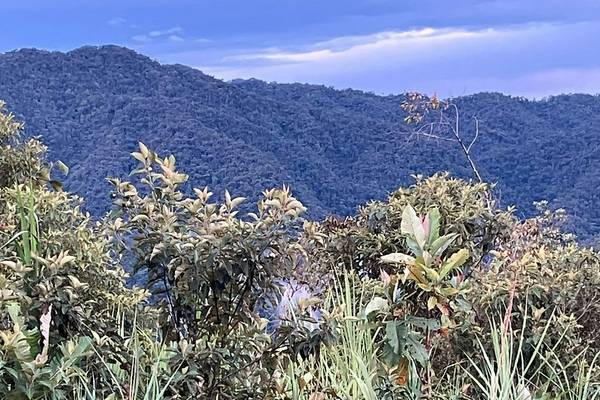
The Naturetrek Candelaria and Naturetrek Viscaya Reserves, our original reserves, have gradually grown in size since 2007 as new blocks of land became available for us to purchase. The Naturetrek Candelaria Reserve is a large block of forest within the main wildlife corridor connecting the two national parks, whilst the Naturetrek Viscaya Reserve connects the Llanganates National Park with a different kind of lower-elevation forest.
Because the Naturetrek Reserves connect higher altitude cloudforest to the vulnerable riparian forests along the valley floor, they not only provide vital river access for large mammals and other species but also extend protection to the more diverse lower elevations that are not protected by the highland national parks in this watershed. For example, a recently discovered and very rare tree, Blakea attenboroughii, is not known from any national park yet is present in the Naturetrek Reserve. The upper Río Pastaza watershed is home to nearly 200 additional species of plants found nowhere else in the world, and this number is steadily increasing due to botanical investigation. The birdlife here is also very special, with species such as the Andean Cock-of-the-rock, Giant Antpitta, and the endangered Black-and-chestnut Eagle, one of which has been spotted by EcoMinga staff carrying a capuchin monkey through the air!
Naturetrek El Encanto Reserve
Until now, our efforts have focused on building the Naturetrek Candelaria Reserve and Naturetrek Viscaya Reserve, which together have helped to form an important cloudforest wildlife corridor between the Llanganates and Sangay National Parks. With this long-held ambition now essentially complete, we have turned our attention to the neighbouring ‘El Encanto’ region.
Our donation, derived from the £15 / £5 sum that we set aside for every flight that we book on behalf of our clients, has enabled us to purchase two blocks in El Encanto, a combined 466 acres in size. This latest purchase increases the acreage of our Naturetrek Reserves in Ecuador to 2,181 acres in total.
Being at a slightly lower elevation than our existing reserves, El Encanto (meaning 'the enchanted' land) holds a wealth of mammals, including Jaguar, Puma, Ocelot, Giant Anteater, both Mountain and Brazilian Tapir, White-lipped Peccary and, of course, Spectacled Bear. Indeed, we have already captured images on a camera trap of a Jaguar that is present in our new reserve!
Rewilding at Naturetrek HQ
The Naturetrek office, Mingledown Barn, is set amongst 12 acres of grassland, formally used for livestock grazing, and years of agricultural activities had reduced the site’s ecological value. We have worked hard since moving here in 2014 to enhance our site for wildlife, rebalancing nature in the grounds around our offices. One of our first projects was a thorough overhaul of an existing pond, which had been in situ for many years and was in poor condition, offering very limited value to wildlife. We sensitively emptied the pond and removed the liner. Then came an exciting day where, with the help of a digger, we expanded the pond’s footprint, creating varying depths and scalloped edges to create a range of microclimates for different species! We also created a south-facing ‘butterfly bank’ with some of the excavated materials, capping it with chalk ready for seeding with chalk downland wildflowers, as well as some log piles to provide nooks and crannies for wildlife. We added new underlining and liner, and then waited patiently for the rain to come! The pond is now totally transformed, and during the summer months we all enjoy watching dragonflies darting about and the resident Grass Snake taking a swim whilst we have our lunch.
We have also planted a mixed, native species hedgerow around our pond and orchard, including oak, elm and blackthorn to support our nearby Brown Hairstreak butterfly population. Since 2022, with the support of The Tree Council and Network Rail, we have gone on to plant some 5,000 trees to strengthen landscape connectivity through our land. We have also installed numerous nesting boxes and owl boxes, and some years the team has enjoyed watching Little Owls nest and raise chicks just outside the barn!