Tailormade New Zealand

Tour Code: TNLZ

Tucked away in the southern Pacific, New Zealand is characterised by its juxtaposing scenery; from the green and rolling hills of the North Island to the imposing peaks of the Southern Alps; from turbulent coastlines and bubbling geothermal pools to majestic fjords and mossy, ancient forests. Endemic wildlife contrasts with more cosmopolitan species, and protected island reserves support important species such as the Little Spotted Kiwi, Brown Kiwi, Kaka, Stitchbird and Takahe, as well as unique reptiles including Tuatara and Duvaucel’s Gecko. In the coastal waters, New Zealand Sea Lions and Fur Seals, and several species of penguin, dolphin and whale can often delight during pelagic excursions. The Cook Strait, Kaikoura and Fjordland National Park offer easily accessible wildlife-watching opportunities. Further off the beaten track and scattered off the southern tip of New Zealand, the Subantarctic Islands are home to impressive numbers of breeding seabirds including Southern Royal Albatross, Royal and King Penguins, as well as thousands of petrels, shearwaters and cormorants.


Sample Itineraries

For a relatively small nation, New Zealand boasts extraordinary landscapes and unique wildlife. Its remote location in the South Pacific has strongly influenced its geology, ecology, and cultural heritage. All these characters are intertwined, making any visit to New Zealand an all-encompassing and unforgettable one. From dramatic volcanic peaks and glacier-carved fjords to secluded coastal bays and hard-to-reach islands, New Zealand rarely fails to impress. Click one to scroll down and view more info.

When to Go
Good Time to Go

ALL YEAR ROUND

Best Time to Go

January to February, June to August, November to December

Speak to a travel expert
Where to Go
  • Tiritiri Matangi Island
  • Kapiti Island
  • Marlborough Sounds
  • Kaikoura
  • +3 more
View all

Summary

Tucked away in the southern Pacific, New Zealand is characterised by its juxtaposing scenery; from the green and rolling hills of the North Island to the imposing peaks of the Southern Alps; from turbulent coastlines and bubbling geothermal pools to majestic fjords and mossy, ancient forests. Endemic wildlife contrasts with more cosmopolitan species, and protected island reserves support important species such as the Little Spotted Kiwi, Brown Kiwi, Kaka, Stitchbird and Takahe, as well as unique reptiles including Tuatara and Duvaucel’s Gecko. In the coastal waters, New Zealand Sea Lions and Fur Seals, and several species of penguin, dolphin and whale can often delight during pelagic excursions. The Cook Strait, Kaikoura and Fjordland National Park offer easily accessible wildlife-watching opportunities. Further off the beaten track and scattered off the southern tip of New Zealand, the Subantarctic Islands are home to impressive numbers of breeding seabirds including Southern Royal Albatross, Royal and King Penguins, as well as thousands of petrels, shearwaters and cormorants.

Our Locations

North Island Saddleback, New Zealand shutterstock_1438586597.jpg

Meaning ‘looking to the wind’, this 22-hectare Scientific Reserve lies just north-east of Auckland, at the entrance to the Hauraki Gulf. Concerted habitat restoration in the 1980s, as well as the eradication of Pacific Rats and Possums, have led to the island sanctuary becoming world renowned for its successful conservation of native wildlife. Well-maintained walking trails and guided tours make this wonderful island easy to access for all. Amongst eye-catching crimson-flowered Pohutukawa and glossy-leaved Kohekohe trees, listen out for Korimako (Bellbird), North Island Kokako, Tieke (Saddleback), Riroriro (Grey Warbler) and the melodic calls of Tui. Smaller songbirds such as Rifleman and North Island Robin will reward the keen-eyed; likewise, in wetland areas, the secretive Puweto (Spotless Crake) may be seen. Endemic reptiles, including Moko Skink and Duvaucel’s Gecko, are now found across the island.

Stitchbird, New Zealand shutterstock_1656020230.jpg

Lying 5 kilometres off the North Island’s west coast near Wellington, Kapiti Island Nature Reserve may only be 10 kilometres long, but it is a precious refuge for New Zealand endemics including the endangered Little-spotted Kiwi (now extinct on the mainland), as well as the native owl, or Morepork (Ruru), Kakariki and Saddleback. The rare Stitchbird (Hihi) is a key target for birders visiting Kapiti and there are walking trails with feeders offering chances to see them up close. Blue Penguins nest here, and Kapiti is a stronghold for the endangered Takahe and North Island Kaka. Visits to the island must be authorised and numbers are limited, but there are opportunities for nocturnal tours and exclusive overnight stays.

Weka, New Zealand shutterstock_1281281518.jpg

Nestled between the North and South Island, Marlborough Sounds captivates with its breathtaking natural beauty. A symphony of rugged coastlines, emerald hills, and serene azure waters, Marlborough Sounds is a paradise for nature enthusiasts and seekers of tranquillity. Lush forests stretch to the water's edge, while secluded bays and coves invite exploration by kayak or sailboat. The Queen Charlotte Track meanders along the coastline, offering exhilarating hikes and sweeping vistas. Rich marine and birdlife thrive in this coastal haven. Pods of playful dolphins dance through the cerulean waters, while inquisitive seals bask on rocky outcrops. Weka, Fernbird, Sacred Kingfisher and Tui are just a few of the numerous birds to be seen here.

Sperm Whale, New Zealand shutterstock_1174391689.jpg

If there is one name that comes up with any mention of whale-watching in New Zealand, it will surely be Kaikoura. Nestled between the Pacific Ocean and the towering Seaward Kaikoura Range, the 2-kilometre-deep Kaikoura Canyon close to shore creates an incredibly rich feeding hotspot for marine wildlife. Whilst the warmer months bring Blue Whales and Orca, the cooler months are a good time to spot Humpbacks and Pilot Whales, and Sperm Whales can be seen year-round. Acrobatic Dusky Dolphins are frequently seen from Kaikoura. A huge diversity of birdlife also depends on the waters here, and there are various opportunities for guided boat trips to see numerous species of albatross, shearwater, petrel, penguin, tern and prion, to name a few.

New Zealand Falcon shutterstock_1587124960.jpg

Amidst the dramatic alpine landscape of the Mackenzie Basin, the glassy waters of Lake Ohau mirror the towering peaks of the Ben Ohau Range, creating a picturesque vista. Among the diverse fauna here, the endemic New Zealand Falcon and Black Stilt are notable highlights, as are native waterfowl such as Paradise Shelduck, New Zealand Scaup and the rare Brown Teal. The New Zealand Rock Wren, an endearing South Island endemic, may also be spotted here. Lake Ohau falls within the Aoraki Mackenzie International Dark Sky Reserve, recognised for its clear and unpolluted night skies, making this a fantastic spot for stargazing.

Stewart Island Brown Kiwi, Ulva, New Zealand shutterstock_1287792994.jpg

Known among the Māori as the ‘Land of the Glowing Skies’, this thickly forested island gives the alluring sense of being untamed. Despite a history of human habitation going back several centuries, Stewart Island is a wildlife haven, home to the elusive and enigmatic Stewart Island Kiwi. Inquisitive Hector’s Dolphins patrol the inshore waters and rare Yellow-eyed Penguins breed on the secluded beaches. Whilst wandering the scenic trails, look out for charismatic South Island Saddlebacks and Kaka, a forest parrot, and immerse yourself in the melodious song of the Bellbird.

Dusky Dolphin New zealand shutterstock_91318964.jpg

With immense jagged peaks furnished with untouched forests, cascading waterfalls and serene sapphire waters, the south-western end of the South Island is an ancient and iconic landscape. The high rainfall here, combined with the hard granitic geology and deeply carved fjords, creates an unusual ecology, with normally deep-water Black Corals found in the shallows, observable from the Underwater Observatory at Piopiotahi Marine Reserve. A boat trip through the fjords enables close-up views of Sea Lions lazing on the rocky shorelines and Bottlenose and Dusky Dolphins which visit these sheltered waters from the Tasman Sea. Birdlife can be abundant but tricky to see, from Fjordland Crested Penguins on inaccessible islets to forest species such as Bellbird, Tui, New Zealand Pigeon, Rifleman and Tomtit.

Sample Itineraries

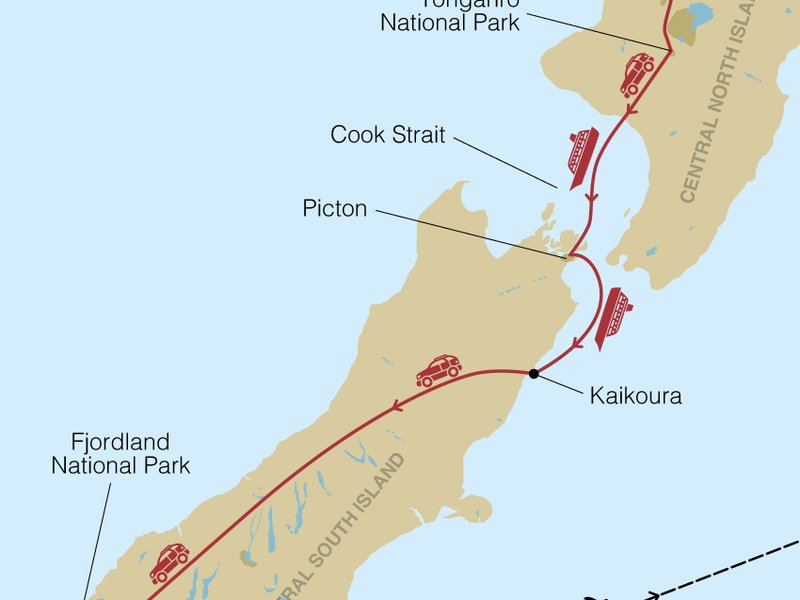
Days
1 - 2

Depart UK

Day
3

Auckland

Day
4

Tiritiri Matangi Island

Day
5

Miranda Wildlife Sanctuary and Lake Taupo

Day
6

Pureora Forest Park

Day
7

Tongariro National Park

Day
8

Cook Strait and Picton

Day
9

Kaikoura

Day
10

Arthur’s Pass National Park

Day
11

Westland National Park

Day
12

Lake Moeraki

Days
13 - 14

Fjordland National Park

Days
15 - 16

Stewart Island

Day
17

Dunedin

Day
18

Depart Dunedin

Day
19

Arrive UK

Itinerary Image

19 Days ()

Enquire Now

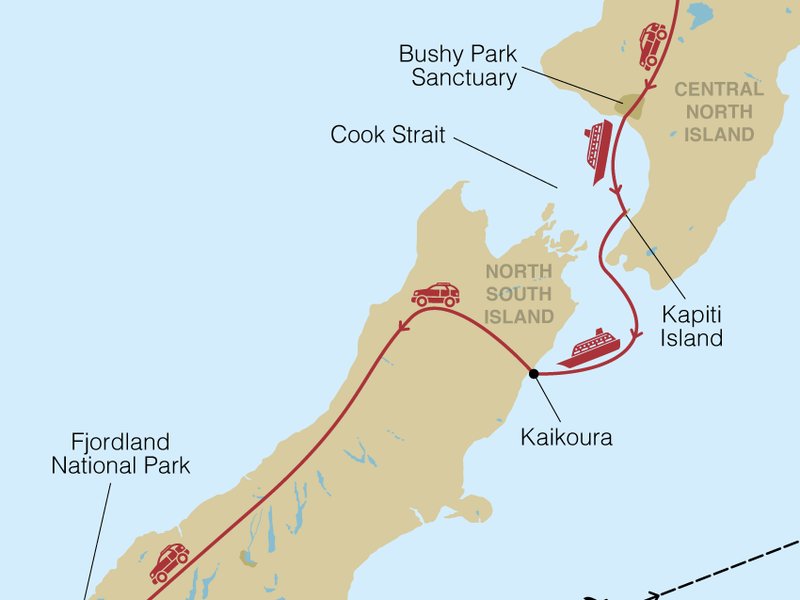
Days
1 - 2

Depart UK

Day
3

Auckland

Day
5

Tiritiri Matangi Island

Day
6

Waimangu Volcanic Valley and Lake Taupo

Day
7

Tongariro Forest Park

Day
8

Bushy Park Sanctuary

Day
9

Kapiti Island

Day
10

Cook Strait and Picton

Day
11

Marlborough Sounds

Day
12

Kaikoura

Day
13

Arthur’s Pass and Hokitika

Day
14

Westland National Park

Day
15

Lake Moeraki

Day
16

Lake Ohau

Days
17 - 18

Fjordland National Park

Days
19 - 20

Stewart Island

Day
21

Dunedin

Day
22

Depart Dunedin

Day
23

Arrive UK

Itinerary Image

23 Days ()

Enquire Now

The Essentials

Wildlife Guides

We work with an excellent selection of local naturalist guides who may accompany you throughout your holiday. Self-drive offers a more cost-effective option, and we can arrange for you to meet up with local specialists at appropriate intervals to maximise your wildlife experience.

When to Visit

Alpine areas are only accessible from spring to early autumn, so the austral winter is best avoided. The oceanic climate means weather can be variable. The wettest period on the North Island is June to August, whilst on the South Island, September to November is generally the wettest. For marine mammals, virtually any month can bring success, whilst for vibrant botanical displays and nesting seabirds, September to December is the best time to visit.

Getting Around

New Zealand’s main island attractions are easily accessed by road, but there are more adventurous options for keen hikers as well as numerous exciting boat trips. Visits to Tiritiri Matangi or Kapiti Island can comfortably be incorporated into most itineraries, and Stewart Island entices many further south. For longer itineraries, a voyage to the Subantarctic Islands is an exciting prospect, especially for birders.

Why Naturetrek Tailormade?

A Naturetrek Tailormade holiday allows you, with the benefit of our wildlife travel expertise and destination experience, to enjoy the perfect private wildlife holiday – one that truly matches your requirements, expectations and ambitions. We will ensure the most competitive prices, superb naturalist guides and seamless ground services.

Some of the benefits of Naturetrek Tailormade travel include:
• A bespoke itinerary which is crafted by experts and designed specifically for you
• Private guiding by the very best local naturalists 
• Travel with people you know, at your own pace
• Incorporate as much culture, history or relaxation time as you wish
• Choose dates to suit you
• Select your preferred style of accommodation
• Travel with families and children of any age

Furthermore, our Tailormade team are always on hand to help and guide you along the way, with friendly advice, first-hand knowledge and inside information specific to your destination of choice. So if you have any queries about your holiday, we will be delighted to answer them. Please just give us a call!

Georgie Dodds
Georgie Dodds
Tailormade Manager
Why Choose Naturetrek?

Click any badge to read more reviews

My Saved Tours

Saved Tours

Click the star icon on any tour to save it here - you'll find this icon on tour pages and cards across the website.

Browse our tours